4–5 days · 3–4 nights · default stay

China · Qinghai-Tibet Plateau · Potala Palace · Sacred Barkhor Circuit

Lhasa & Tibet 拉萨与西藏

The spiritual roof of the world: Potala Palace, devout pilgrim circuits and sacred turquoise alpine lakes.

Recommended stay4–5 days · 3–4 nights
Ease of travel4/10
First China trip5/10
Infrastructure6/10
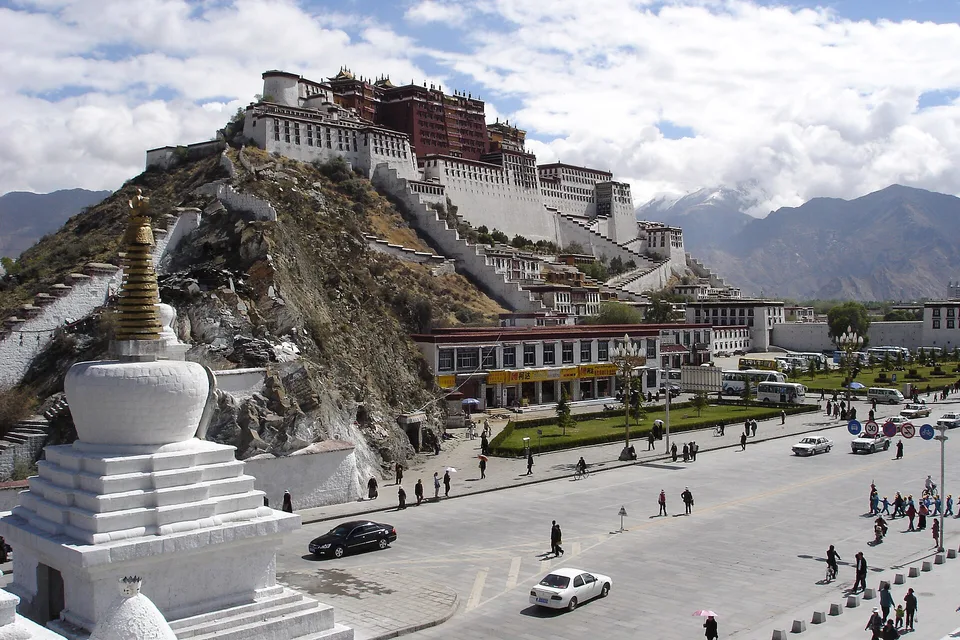
View of the Potala Palace from the foothill of Chagpo Ri (Lhasa, Tibet Autonomous Region, People's Republic of China).
29.65°N · 91.13°E Plateau Spirituality & Heritage
Photo: Ondřej Žváček (CC BY 2.5)

Why this place

Lhasa & Tibet

Nestled at 3,656 metres on the Qinghai-Tibet Plateau, Lhasa is the spiritual heart of Tibetan Buddhism, surrounded by high-altitude mountain ranges. The Potala Palace, Jokhang Temple and Barkhor circuit represent one of the world’s most intact living sacred landscapes, defined by thin air, brilliant sunlight and towering Himalayan topography.

First-time visitors often underestimate altitude sickness and regulatory requirements. This destination is not suitable for spontaneous backpacking. Slow acclimatisation is essential; spend your first day resting rather than rushing through landmarks. Local religious customs remain living traditions, not staged exhibits, requiring quiet respect.

The ChinaTrip take

The Sacred Rooftop of Living Tibetan Buddhism

Lhasa is unlike anywhere else on earth. Surrounded by barren 5,000-metre Himalayan peaks, this high-altitude valley vibrates with incense smoke, butter lamps and the ceaseless clockwise circumambulation of pilgrims. From the crimson-and-white bastion of the Potala Palace to the sunlit flagstones of Jokhang Temple, Lhasa remains an intensely moving spiritual realm where ancient customs thrive daily.

How this destination fits a China trip

01

What defines it

The towering crimson bastion of Potala Palace, Jokhang Temple’s sacred kora circuit, and an intact 3,656m living Tibetan Buddhist cultural landscape.

02

Who it suits best

Mindful cultural seekers, Himalayan landscape photographers, pilgrims and slow travellers prepared to respect deeply ingrained religious customs.

03

Plan around this

Foreign passport holders must obtain a pre-approved Tibet Travel Permit via licensed agencies 15–30 days prior; rest strictly on Day 1 to adapt to thin air.

ChinaTrip scorecard

The same 0–10 scale is calibrated across our entire catalogue, ensuring comparisons remain strictly reliable.

Culture10/10
Food7/10
History10/10
Nightlife4/10
Heritage & Architecture10/10
Nature10/10
Wildlife6/10
Adventure9/10
Local feel9/10
Photography10/10

Plan China

Getting there & moving on

Practical transit guidance from ChinaTrip’s curated high-speed rail and flight graph. Times are realistic door-to-door estimates.

Main planning gateway

Lhasa Gonggar (LXA) · Lhasa Railway Station

Typical access High-altitude plateau destination requiring pre-approved travel permit for foreign nationals
Gateway transfer Airport coach or private pre-booked vehicle, 60–90 min to Lhasa city centre Fixed-rate airport coaches depart from outside arrivals terminal every 30–60 minutes. Taxis and private transfers available; private vehicles must be arranged via licensed travel agencies for foreign visitors.
Entry clearance 30-Day Visa-Free Hub 50 eligible nations · No city limits

Visitors may reach Lhasa by air from Chengdu, Xining or Kunming, or via the iconic Qinghai-Tibet railway from Xining. Foreign travellers cannot board flights or trains bound for Lhasa without a pre-issued Tibet Travel Permit arranged by licensed local travel operators. Within Lhasa city, licensed guides accompany foreign groups for sightseeing.

Good onward connections

These are the strongest high-speed rail next-step links in the curated ChinaTrip route graph, not an exhaustive railway timetable.

Times are realistic door-to-door high-speed rail estimates. Bullet trains run directly between central downtown stations without airport transit buffers.

When to go

Season matters. Calibrated climate, atmospheric clarity, crowd volume, and overall travel fit for Lhasa & Tibet.

9–10 / 10 · Ideal (Best weather) 7–8 / 10 · Good (Shoulder season) 5–6 / 10 · Caution (Heat, cold or crowd peak)
Best Window
Late Spring to Early Autumn (May–Oct)

Peak oxygen concentration, mild daytime temperatures (18°C–23°C), open mountain passes to holy lakes, and lush valley greenery across the plateau.

Shoulder Season
Shoulder Months (Apr, Nov) · Golden Sun

Crisp blue skies and brilliant sunshine with far fewer tour groups; excellent visibility for distant snow-capped Himalayan peaks.

Challenging / Low
Winter (Dec–Mar) · High-Altitude Freeze

Sub-zero temperatures, harsh dry plateau winds, and frequent snow closures on high mountain passes (such as Gampa La and Namtso passes).

Jan 5/10 Cold
Feb 5/10 Cold
Mar 6/10 Caution
Apr 8/10 Good
May 9/10 Ideal
Jun 9/10 Ideal
Jul 9/10 Ideal
Aug 9/10 Ideal
Sep 10/10 Ideal
Oct 9/10 Ideal
Nov 6/10 Caution
Dec 5/10 Cold

A strong first visit in 4 days

Day 1

High-Altitude Acclimatisation & Gentle Barkhor Clockwise Kora

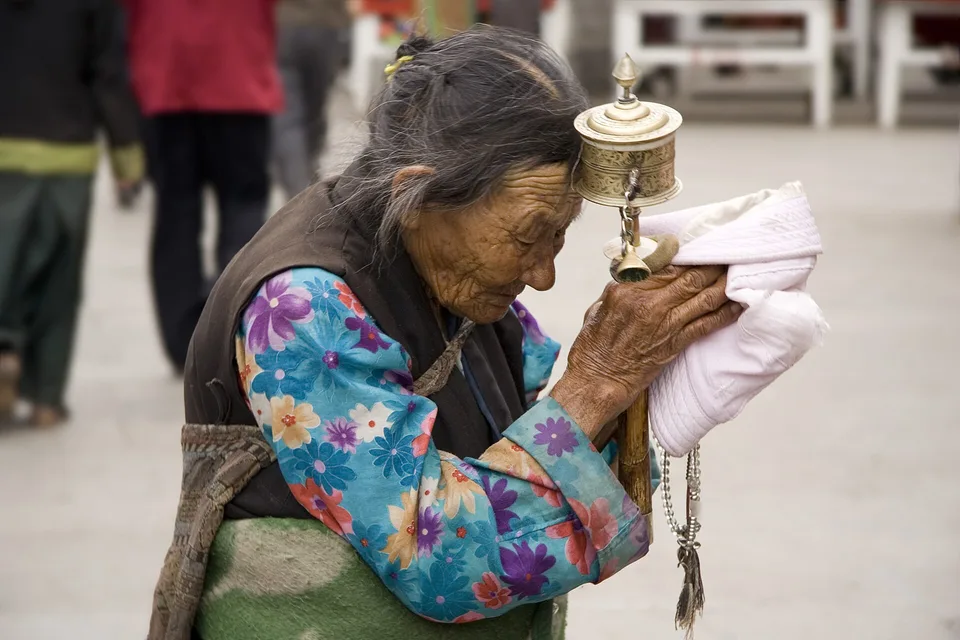
Arrive at Lhasa Gonggar Airport (LXA) or Lhasa Railway Station, situated at 3,656 metres on the Qinghai-Tibet Plateau. Your licensed agency driver and Tibetan guide will greet you with a ceremonial white khata and inspect your physical Tibet Travel Permit (TTB). The 60 km transfer to Lhasa takes roughly one hour via the expressway. Allocate your entire first 24 hours to strict rest and acclimatisation: avoid running, alcohol, and hot showers on day one, which dilate blood vessels and exacerbate acute mountain sickness (AMS). Check into an Old Town hotel equipped with diffused central oxygen. In the late afternoon, step out for a slow, level walk around Barkhor Street (八廓街). Always follow the clockwise circumambulation (kora) with Tibetan pilgrims spinning handheld prayer wheels. Stop at historic Guangming Kamkong Teahouse for a glass of sweet milk tea (甜茶) or rich yak butter tea (酥油茶), accompanied by warm Tibetan momos (steamed dumplings). Turn in early to prepare for climbing stairs tomorrow.

Day 2

Potala Palace Royal Quota & Spiritual Heart at Jokhang Temple

Reserve your Potala Palace entry exactly 7 days ahead through your registered Tibet agency; individual foreigner walk-ins are impossible due to strict daily quotas. Bring your physical passport and Tibet Permit for three consecutive security checkpoints. Climb the 300+ whitewashed stone steps slowly at this altitude. Once inside the Red and White Palaces, a strictly enforced 60-minute countdown governs your visit through gilded stupas of past Dalai Lamas, jewel-encrusted mandalas, and ancient scriptures; photography is strictly forbidden inside chapels. After lunch at a quiet Tibetan restaurant (try braised yak beef and highland barley tsampa), proceed to Jokhang Temple (大昭寺), the supreme spiritual sanctum of Tibet. Walk the inner circumambulation hall past centuries-old butter lamps to witness the sacred Jowo Rinpoche (life-sized 12-year-old Sakyamuni statue). Climb to the temple roof terrace for an iconic golden-roof panorama framing the distant Potala Palace against crisp Himalayan azure skies.

Day 3

Drepung Monastery Footpaths & Sera Monastic Theological Debates

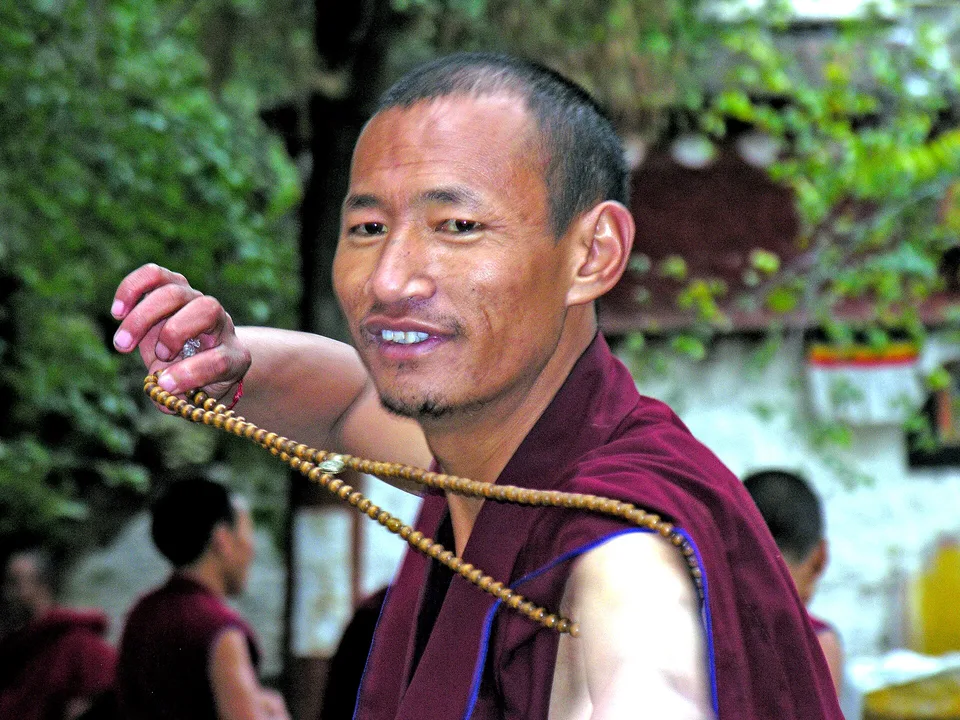
Begin your morning at Drepung Monastery (哲蚌寺), once the world’s largest Buddhist monastic complex housing over 10,000 monks. Ascend the hillside cobblestone paths through whitewashed monastic residential quarters and inspect the enormous copper cauldrons in the historic communal kitchen. Have lunch nearby, then drive 15 minutes northeast to Sera Monastery (色拉寺) specifically for the world-renowned monastic theological debates (辩经), held in the shady gravel courtyard Monday through Saturday between 15:00 and 17:00. Watch burgundy-robed monks test doctrinal logic through dramatic hand-slaps, heel-stamps, and rosary rolls—a dynamic scholastic tradition dating back over six centuries. Respect monastic etiquette: observe quietly from perimeter walkways, keep voices down, and refrain from stepping into debate circles. In the evening, celebrate your final Lhasa night with a sizzling Tibetan stone-pot chicken (石锅鸡) simmered with wild plateau matsutake mushrooms.

Day 4

Yamdrok Holy Lake Day Excursion & Gampa La Mountain Pass

Embark on a spectacular high-altitude day trip from Lhasa south to Yamdrok Lake (羊卓雍措, 4,441m), one of Tibet’s three supreme sacred lakes. Private charter vehicle with your licensed Tibetan guide is mandatory; the 110 km winding mountain drive takes approximately 2.5 hours each way. Depart early by 7:30 AM to ascend Gampa La Pass (岗巴拉山口, 4,990m) before tour convoys arrive. Step out onto the panoramic ridge to witness the mesmerising turquoise ribbon of Yamdrok Lake coiling through barren terracotta mountains beneath the snow-capped peak of Mount Nojin Kangsang (7,191m). Descend slowly to the lake shore for a quiet lakeside walk; treat local prayer flags with respect and do not wade into or pollute the sacred water. Avoid aggressive touts offering oversized Tibetan mastiffs or baby yaks for paid photo ops. Return to Lhasa by late afternoon to pick up souvenirs along Barkhor or transfer to the airport or train station for your onward journey.

Who does it suit?

First-time China travellers5/10
History & culture buffs10/10
Couples9/10
Families with teenagers8/10
Photographers10/10
Active travellers9/10
Slow travel6/10
Solo travellers9/10

ChinaTrip Verdict

How long should you stay?

We recommend 4–5 days · 3–4 nights for most international travelers. That gives you dedicated unhurried time to absorb the primary highlights without feeling rushed or stretching beyond the useful range.

Direct answers

Essential travel FAQ & warnings

Fact-checked official entry rules, ticket release schedules, and logistics advisories for international visitors.

Booking & Travel Alert

What is the key difference between Chinese domestic visitors and foreign passport holders travelling to Lhasa?

Chinese mainland citizens only require national ID to enter and travel within Lhasa with no special permit. All foreign passport holders must obtain a Tibet Travel Permit (TTP), which can only be applied for through a licensed Tibetan travel agency. Independent, unguided travel is not permitted. You cannot check in for flights or trains heading to Lhasa without this permit, and you must travel with a prearranged guide and fixed itinerary.

Universal China Travel Policies

Nationwide Regulations & Booking Rules for Foreign Passport Holders

These official real-name entry, ticketing, and immigration rules apply uniformly across all Chinese cities:

Global Booking Rule Can foreign passport holders book attraction tickets on Chinese WeChat mini-programs?

Most official Chinese WeChat mini-programs support passport as an ID type, but registration requires a mainland Chinese +86 mobile phone number for SMS verification. Most overseas visitors cannot register independently.

Global Booking Rule What booking channels are available for foreign visitors without a Chinese mobile number?

Four practical booking channels (priority order):
1. Recommended self-booking: International OTA platforms (Trip.com international site, Klook, GetYourGuide). English interface, register with overseas email or foreign mobile number, pay with Visa/Mastercard, directly fill passport details.
2. Official English website (only available for a small number of scenic sites).
3. Hotel concierge or licensed local guide. Provide your passport copy; they can book tickets via official mini-program using their Chinese mobile number.
4. Emergency on-site backup: Foreigner service ticket counter or multi-language self-service machines at the attraction. Warning: during peak seasons, timed tickets often sell out fully in advance. On-site purchase is not guaranteed and queues can be long.

Global Booking Rule Do I need to pick a visit date on Trip.com? Are booking and reservation handled on separate websites?

Booking and timed reservation are completed together inside Trip.com international site, no second website or WeChat mini-program required.
While purchasing tickets, you directly choose your visit date. Many popular attractions also require selection of entry time slot, entry gate or sightseeing route. Fill passport information and complete payment. Once confirmed, your real-name reservation slot is locked under your passport automatically.
Important Warning: A small subset of products are voucher-only; these only give a redeem code and still require separate reservation on official sites. Always select items labelled Direct Timed Entry Ticket.
For multi-day re-entry (such as Zhangjiajie’s 4-day ticket), check product description: free re-entry time slots may still need separate reservation even when your main ticket remains valid.

Global Entry Rule Can I enter attractions using only a photo or scanned copy of my passport?

No. Physical original passport is mandatory for entry at all scenic sites. Photos, screenshots, digital scans of passport are not accepted for manual verification or facial recognition checks.

Immigration & Accommodation What is the accommodation registration rule for foreign visitors?

Foreign passport holders must complete accommodation registration within 24 hours after entering China. If you check into a licensed hotel, the hotel staff will automatically complete this registration for you. No need for you to personally visit a police station.

Immigration & Accommodation What is China’s visa-free entry policy for foreign tourists?

China offers unilateral visa-free entry for citizens from a list of countries. Visa-free travel is valid for mainland China, you can travel to any city within the allowed stay period. Visa-free permission does not cover Hong Kong, Macau or Taiwan. Check the official National Immigration Administration website for the latest country list and maximum stay duration before travel.

ℹ️ All information is fact-checked against official authorities. Verified ticket & train links may earn ChinaTrip a modest commission at zero cost to you.

Does Lhasa & Tibet sound like your China?

Use Find Your China to compare this destination with the rest of the country using your own priorities.