
2–3 days · 1–2 nights · default stay

China · Southern Harbour City · Love River, Cijin Seaside, Fo Guang Shan Monastery & Tropical Coastal Food

Kaohsiung 高雄

Southern maritime port city, breezy Cijin Island shores, serene Fo Guang Shan monastery, and thriving Pier-2 art warehouses.

Recommended stay2–3 days · 1–2 nights
Ease of travel9/10
First China trip8/10
Infrastructure9/10
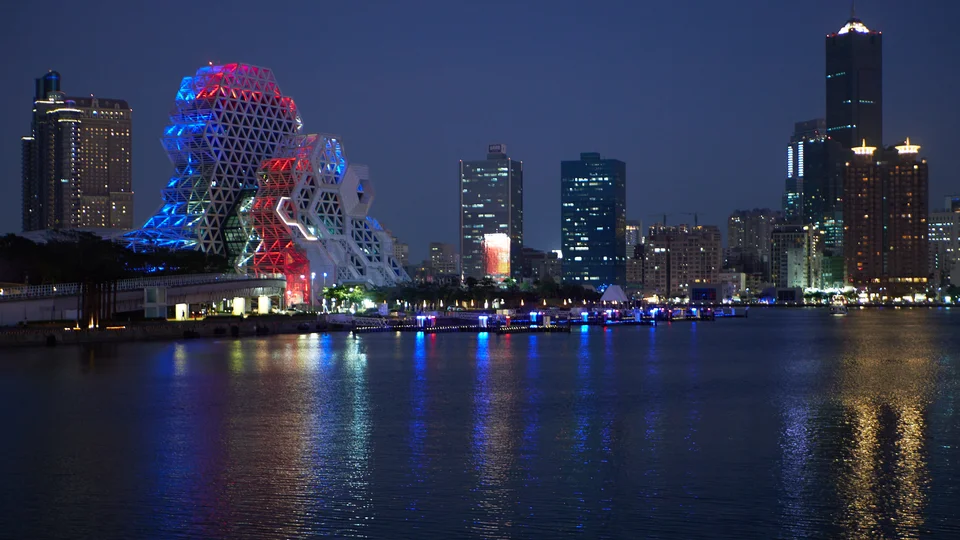
Sweeping panoramic overlook of Kaohsiung international shipping harbour, 85 Sky Tower, and the southern maritime skyline
22.62°N · 120.30°E Southern Maritime Harbour · Love River & Cijin Island
Photo: lumoplank (CC0)

Why this place

Kaohsiung

Kaohsiung is Taiwan’s principal southern port, a sun-baked coastal city built around the wide Love River and sheltered harbour. Unlike Taipei’s compact basin density, it unfolds across flat coastal plains, with mangrove wetlands, fishing islets and large Buddhist temple complexes within easy reach. Its food identity leans heavily on brackish-water seafood and plain, hearty rice dishes shaped by generations of fishing and agricultural communities.

Most travellers treat Kaohsiung as a quick stopover between Taipei and Kenting, rushing the Love River boat ride and skipping the slower Cijin Island waterfront. The most common pitfalls are overpriced seafood restaurants clustered on the main tourist stretch of Cijin, resellers marking up light rail day passes, and tropical afternoon downpours that can ruin unplanned walking itineraries between May and September.
The ChinaTrip take

Sun-Drenched Maritime Harbours, Love River Esplanades and Monumental Buddhist Sanctuaries

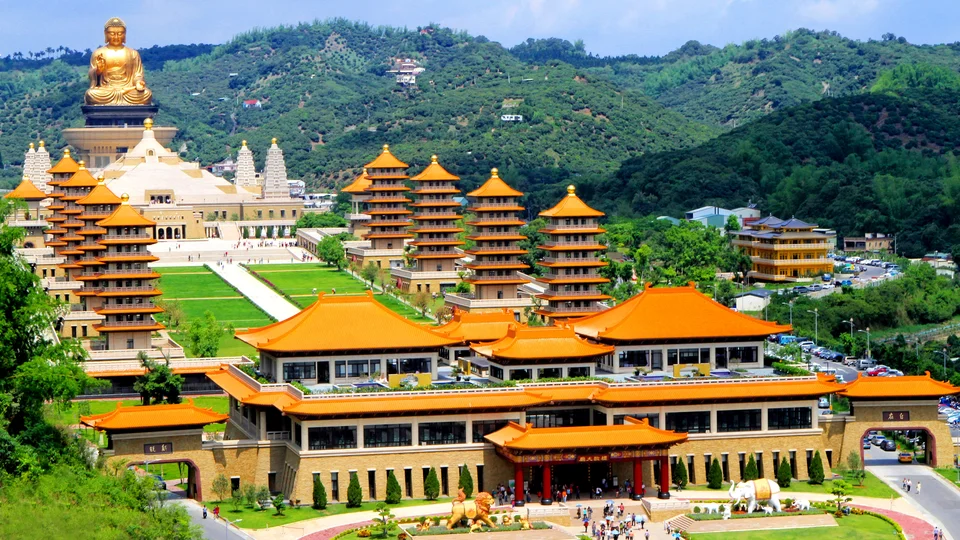
Sprawling across Taiwan's sun-drenched southwestern coastline, Kaohsiung (高雄) is a revitalized maritime port metropolis that has transformed industrial docks into vibrant cultural and creative waterfronts. The historic heart of the port opens toward Cijin Island (旗津), a slender sand spit where bicycles wind between century-old lighthouses, coastal seafood stalls, and sea-breeze promenades. Inland, the tranquil Love River (爱河) meanders through the city centre, illuminated by evening café lights and crisscrossed by modern low-floor light rail trains. Just outside the urban core, the monumental Fo Guang Shan Buddha Museum (佛光山佛陀纪念馆) showcases a towering 108-meter bronze Buddha flanked by eight soaring pagodas, while the whimsical Dragon and Tiger Pagodas at Lotus Pond offer legendary Taoist folk art against lakeside lotuses.

How this destination fits a China trip

01

What defines it

Kaohsiung Harbour skyline, breezy black sand beaches and seafood stalls of Cijin Island, Pier-2 creative docklands, and the giant Buddha at Fo Guang Shan.

02

Who it suits best

Coastal explorers, maritime and architecture lovers, cultural and spiritual seekers, and travelers looking for a laid-back, sunnier contrast to Taipei.

03

Plan around this

Zuoying THSR connects to Taipei in 90 minutes; Kaohsiung Circular Light Rail and MRT accept contactless cards; carry a light umbrella for afternoon summer showers.

ChinaTrip scorecard

The same 0–10 scale is calibrated across our entire catalogue, ensuring comparisons remain strictly reliable.

Culture9/10
Food9/10
History8/10
Nightlife8/10
Heritage & Architecture8/10
Nature7/10
Wildlife4/10
Adventure6/10
Local feel9/10
Photography8/10

Plan China

Getting there & moving on

Practical transit guidance from ChinaTrip’s curated high-speed rail and flight graph. Times are realistic door-to-door estimates.

Main planning gateway

Kaohsiung International Airport (KHH) · Kaohsiung Main Station / Zuoying THSR Station

Typical access THSR high-speed rail from Taipei in 1 hr 30 min; domestic flights from Taichung and Kinmen; Kaohsiung Light Rail circling the harbour zone
Gateway transfer Kaohsiung MRT, circular Light Rail, iPass contactless transit card, harbour ferries to Cijin Island and metered taxis Zuoying Station combines high-speed rail and metro, the main arrival hub for visitors from northern Taiwan. The light rail connects the harbour, art districts and ferry terminals, with English signage and contactless payment readers.
Entry clearance 30-Day Visa-Free Hub 50 eligible nations · No city limits

Tropical monsoon climate. Long hot summers with heavy afternoon thunderstorms; winters are short, dry and pleasantly warm. The best travel window runs from November to April.

Good onward connections

These are the strongest high-speed rail next-step links in the curated ChinaTrip route graph, not an exhaustive railway timetable.

Times are realistic door-to-door high-speed rail estimates. Bullet trains run directly between central downtown stations without airport transit buffers.

When to go

Season matters. Calibrated climate, atmospheric clarity, crowd volume, and overall travel fit for Kaohsiung.

9–10 / 10 · Ideal (Best weather) 7–8 / 10 · Good (Shoulder season) 5–6 / 10 · Caution (Heat, cold or crowd peak)
Best Window
Autumn (Sep–Oct) & Spring (Apr–May)

Golden travel window with crisp blue skies, dry mild weather (16°C–24°C), and comfortable walking conditions across outdoor monuments.

Shoulder Season
Shoulder Season (Mar, Jun, Jul, Aug, Nov)

Pleasant travel weather with fewer crowds, lower hotel rates, and easier attraction reservations.

Challenging / Low
Jul–Aug (Heat/Crowds) & Dec–Feb (Cold)

Mid-summer sees 35°C+ heat and domestic holiday surges; winter is sunny but freezing with biting north winds. Pack accordingly.

Jan 6/10 Cold
Feb 6/10 Cold
Mar 7/10 Good
Apr 9/10 Ideal
May 9/10 Ideal
Jun 8/10 Good
Jul 7/10 Good
Aug 7/10 Good
Sep 10/10 Ideal
Oct 10/10 Ideal
Nov 8/10 Good
Dec 6/10 Cold

A strong first visit in 2 days

Day 1

Cijin Island, Love River & Liuhe Night Market

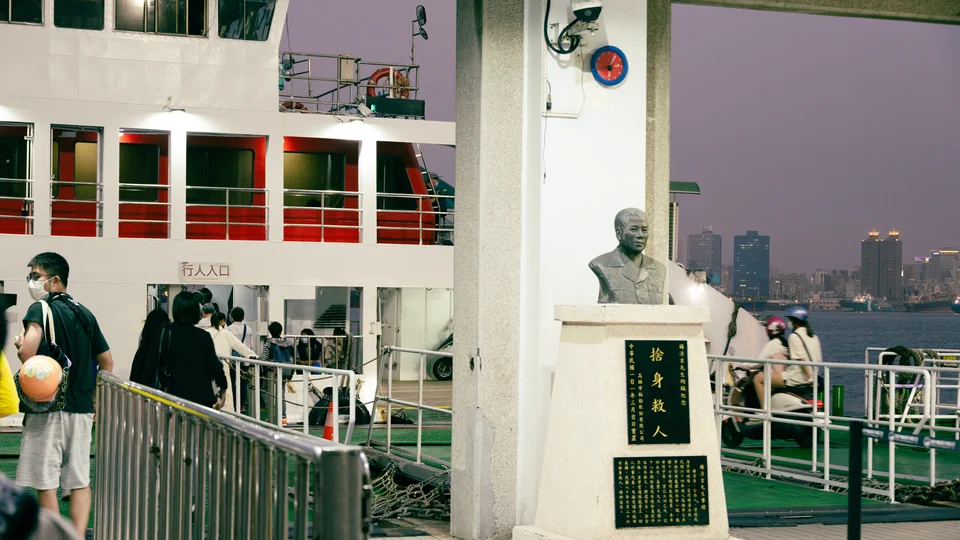
What to see & do: Take the short harbour ferry to Cijin Island, cycle the coastal road, visit the old lighthouse and eat along the quiet backshore. Return across the water, walk the Love River banks at golden hour, then head to Liuhe Night Market after dark. What tourist trap to skip: Skip the frontline seafood restaurants on Cijin main street; cycle a little further south for family-run stalls with clearer pricing. Dining advice: Order milkfish belly congee shimuyu and charcoal grilled squid kao youyu, followed by iced fresh papaya milk mugua niunai.

Day 2

Fo Guang Shan Monastery, Ruifeng Night Market & Harbour Art District

What to see & do: Travel north to Fo Guang Shan, the vast modern Buddhist monastery complex with landscaped courtyards and museum galleries. Return to the city in the afternoon to wander the Pier-2 Art Centre, then finish at Ruifeng Night Market. What tourist trap to skip: Do not accept overpriced guided monastery tours; self-guided walking is free and well-signposted in English. Dining advice: Eat duck meat rice ya rou fan, and try brown sugar boba milk for a richer local take on bubble tea.

Who does it suit?

First-time China travellers8/10
History & culture buffs9/10
Couples8/10
Families with teenagers8/10
Photographers8/10
Active travellers6/10
Slow travel8/10
Solo travellers8/10

ChinaTrip Verdict

How long should you stay?

We recommend 2–3 days · 1–2 nights for most international travelers. That gives you dedicated unhurried time to absorb the primary highlights without feeling rushed or stretching beyond the useful range.

Direct answers

Essential travel FAQ & warnings

Fact-checked official entry rules, ticket release schedules, and logistics advisories for international visitors.

Booking & Logistics Note

How can foreign visitors buy THSR, light rail and ferry tickets without local mobile payment apps?

THSR tickets are available online with international credit cards or at station counters using a passport. The iPass transit card can be bought at convenience stores and light rail stations. Harbour ferries and light rail ticket machines accept Visa, Mastercard and cash in NTD.

Local Tip

What seafood pricing traps and night market tricks should visitors watch for?

Seafood stalls on Cijin sometimes quote prices per tael rather than per portion; confirm the unit before selecting fish or shellfish. Ruifeng has smaller, more consistent snack stalls than Liuhe, with less aggressive hawker pitching.

Practical Check-in Note

What monsoon rain planning, monastery etiquette and luggage storage options apply?

Carry a compact rain jacket from May to September; sudden downpours can last 30–60 minutes. Inside Fo Guang Shan, cover shoulders and knees, and refrain from loud talking. Lockers are available at Zuoying THSR station and Kaohsiung MRT main stations.

Universal China Travel Policies

Nationwide Regulations & Booking Rules for Foreign Passport Holders

These official real-name entry, ticketing, and immigration rules apply uniformly across all Chinese cities:

Global Booking Rule Can foreign passport holders book attraction tickets on Chinese WeChat mini-programs?

Most official Chinese WeChat mini-programs support passport as an ID type, but registration requires a mainland Chinese +86 mobile phone number for SMS verification. Most overseas visitors cannot register independently.

Global Booking Rule What booking channels are available for foreign visitors without a Chinese mobile number?

Four practical booking channels (priority order):
1. Recommended self-booking: International OTA platforms (Trip.com international site, Klook, GetYourGuide). English interface, register with overseas email or foreign mobile number, pay with Visa/Mastercard, directly fill passport details.
2. Official English website (only available for a small number of scenic sites).
3. Hotel concierge or licensed local guide. Provide your passport copy; they can book tickets via official mini-program using their Chinese mobile number.
4. Emergency on-site backup: Foreigner service ticket counter or multi-language self-service machines at the attraction. Warning: during peak seasons, timed tickets often sell out fully in advance. On-site purchase is not guaranteed and queues can be long.

Global Booking Rule Do I need to pick a visit date on Trip.com? Are booking and reservation handled on separate websites?

Booking and timed reservation are completed together inside Trip.com international site, no second website or WeChat mini-program required.
While purchasing tickets, you directly choose your visit date. Many popular attractions also require selection of entry time slot, entry gate or sightseeing route. Fill passport information and complete payment. Once confirmed, your real-name reservation slot is locked under your passport automatically.
Important Warning: A small subset of products are voucher-only; these only give a redeem code and still require separate reservation on official sites. Always select items labelled Direct Timed Entry Ticket.
For multi-day re-entry (such as Zhangjiajie’s 4-day ticket), check product description: free re-entry time slots may still need separate reservation even when your main ticket remains valid.

Global Entry Rule Can I enter attractions using only a photo or scanned copy of my passport?

No. Physical original passport is mandatory for entry at all scenic sites. Photos, screenshots, digital scans of passport are not accepted for manual verification or facial recognition checks.

Immigration & Accommodation What is the accommodation registration rule for foreign visitors?

Foreign passport holders must complete accommodation registration within 24 hours after entering China. If you check into a licensed hotel, the hotel staff will automatically complete this registration for you. No need for you to personally visit a police station.

Immigration & Accommodation What is China’s visa-free entry policy for foreign tourists?

China offers unilateral visa-free entry for citizens from a list of countries. Visa-free travel is valid for mainland China, you can travel to any city within the allowed stay period. Visa-free permission does not cover Hong Kong, Macau or Taiwan. Check the official National Immigration Administration website for the latest country list and maximum stay duration before travel.

ℹ️ All information is fact-checked against official authorities. Verified ticket & train links may earn ChinaTrip a modest commission at zero cost to you.

Does Kaohsiung sound like your China?

Use Find Your China to compare this destination with the rest of the country using your own priorities.